
 Go back
 OPEN WORKSHOPS | CIRCUS EDUCATION CONFERENCE 2026
Roots & Routes | Saknes un trajektorijas | Circus Education Conference 2026
Riga Circus will host the 3rd Riga International Circus Education Conference from April 15 to 17, 2026, within the framework of the FEDEC Spring Talks of the international network for professional circus education. The conference aims to bring together a wide range of performing arts professionals from Europe and the Baltic region — including representatives of formal and non-formal education, artists, curators, producers, and policymakers in education and cultural education, including from Latvia.
The programme on April 17 is open to all interested participants.
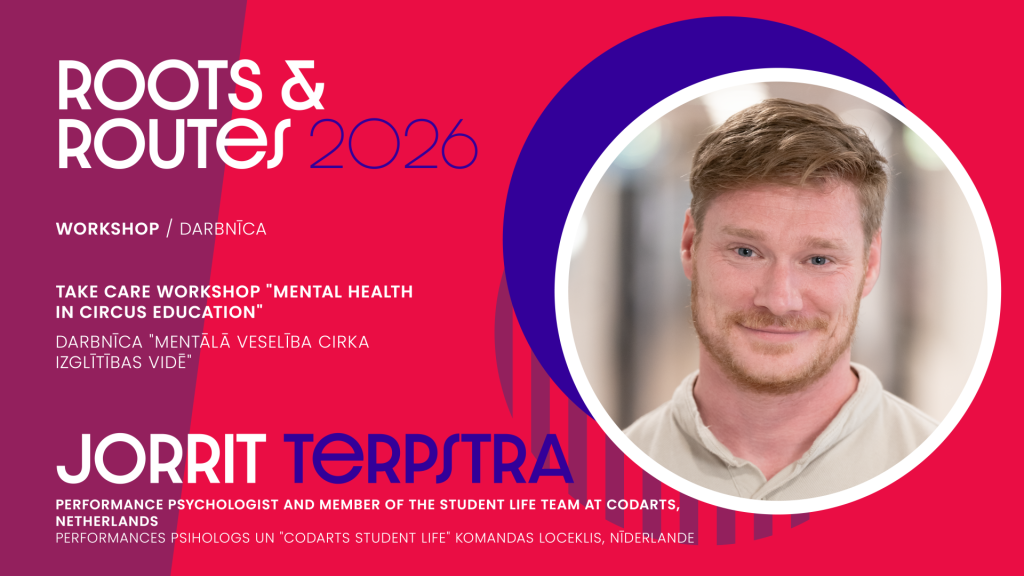
The workshop offers a focused look at how mental health can be intentionally supported within circus education. It draws on the Codarts Student Life program, current research, and practical experience from sports and performance psychology to highlight the psychological demands students face and the skills they need to navigate them. Jorrit will introduce accessible mental tools that help students regulate stress, respond to setbacks, and build sustainable habits. But will also look for insights into how mental‑health literacy, structured support, and everyday choices can strengthen student well‑being and long‑term artistic development.
Jorrit Terpstra is a performance psychologist and member of the Student Life team at Codarts (NL). With a calm, open, and honest approach, he supports artists in navigating the thoughts and emotions that shape their performance — whether in auditions, rehearsals, or on stage. His work focuses on practical mental tools, mindset development, and building confidence, especially in moments of setback, pressure, or injury.
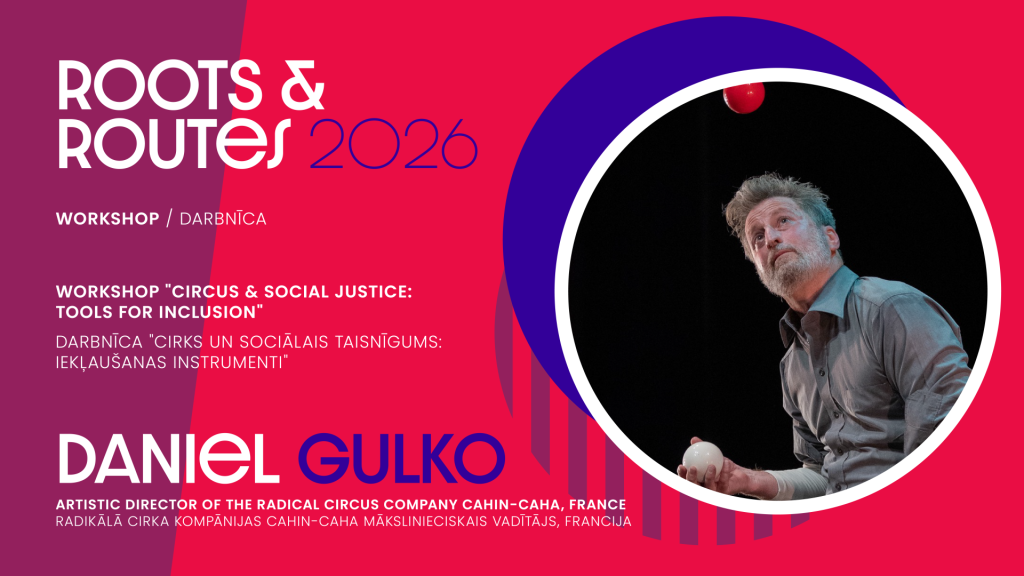
How can we bring our best selves into collaboration, take responsibility, and embrace vulnerability as a form of strength? This workshop explores awareness of both your own and others’ capacities for cooperation, creating space for difficult conversations, and welcoming fear as a guide rather than an obstacle.Train yourself in the joy of sharing!
Daniel Gulko is an author, teacher, director, choreographer, and clown, as well as the artistic director of the France-based radical circus company Cahin-Caha. Internationally recognised for his interdisciplinary approach, his work brings together circus, dance, theatre, visual arts, video, and literature. He has taught and led artistic research at numerous institutions across Europe, including Stockholm University of the Arts, CNAC, Codarts, and JAMU, and has directed a wide range of acclaimed productions internationally. Based in France since 1993, Gulko continues to create, tour, and mentor across the fields of experimental circus and contemporary performance.
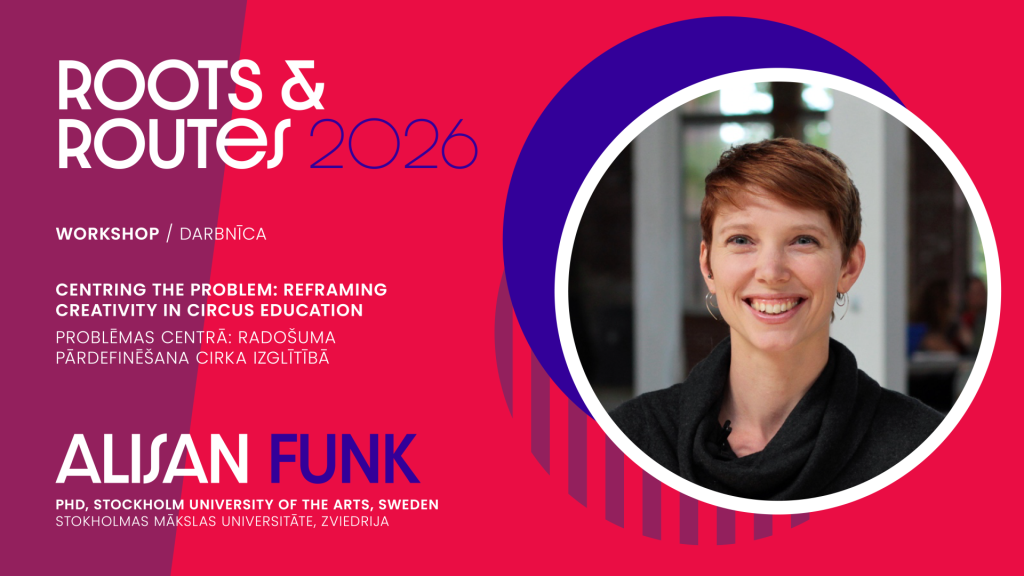
This workshop invites participants to explore their own circus environment through the lens of Applied Circus Creativity. Participants will be led through questions and discussions that help them identify areas in their own work which support or hinder creativity outcomes for circus students and staff.
Dr. Alisan Funk has been a circus student, practitioner, creator, performer, teacher, teacher educator, and researcher. She is currently an assistant professor of circus and head of the Circus Department at the Stockholm University of the Arts. Her work and research focus on the intersections of circus, creativity, and curriculum theory. Since 2020, she has been a member of the managing board of the International Network for Professional Circus Education (FEDEC).
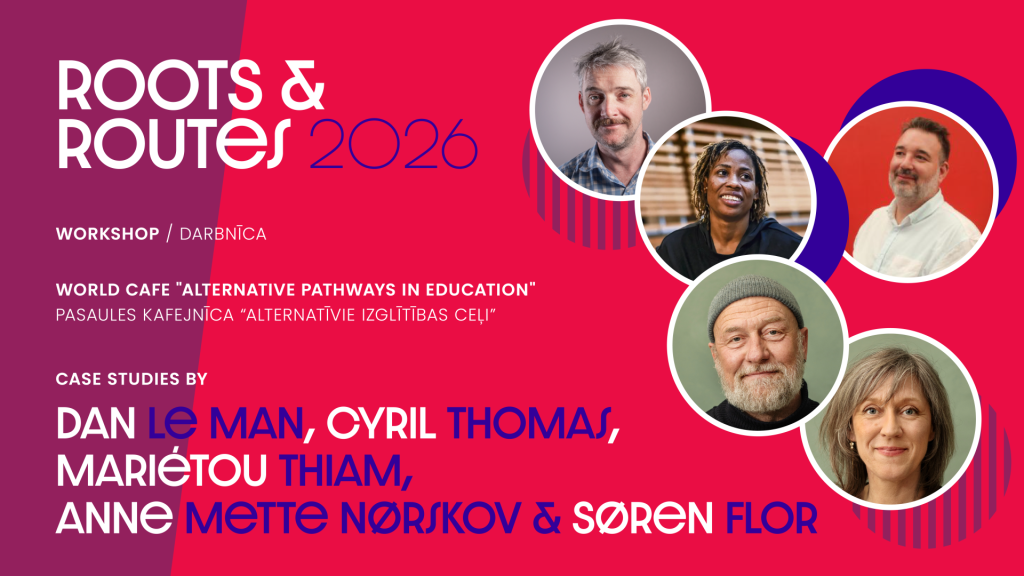
World Café “Alternative Pathways in Education” is an interactive discussion format in which participants rotate between tables hosted by conversation leaders, each presenting a different case study. In an open and informal setting, attendees will explore four examples related to circus education and professional development: sustainable artistic careers, circus as a tool for social change, a case study on Esacto’Lido in Toulouse, and a case study on Copenhagen Contemporary Circus College (CCCC).
- What do circus artists need to turn their creative ideas into sustainable careers?
Circus schools produce highly skilled artists, but what helps them turn their ideas into sustainable careers? In this conversation led by Dan le Man from Creative Combinator, we explore how emerging circus artists develop their creative voice, pitch their work, build networks and transition from graduation projects to real touring acts. Together we will discuss what practical skills, mindsets and industry connections help circus graduates move from idea → act → career.Dan le Man is an Australian-born circus and physical theatre artist with more than 20 years of international touring experience. Based in Estonia, he is the director of the Tallinn Fringe Festival and runs a vaudeville-style theatre presenting over 400 shows each year. He works with emerging circus artists on developing acts, pitching work, and building sustainable careers in the performing arts.
- How can contemporary circus create opportunity and social change?
In this presentation, Marietou Thiam shares the story of SenCirk, a pioneering contemporary circus company and training school based in Dakar. Founded in 2010, SenCirk brings together artists from backgrounds such as breakdance, acrobatics and traditional dance, while also training around fifteen young people aged 18–25 each year. At the heart of its work is circus as a tool for social and professional integration, supporting disadvantaged youth through artistic training, personal development and community engagement. SenCirk also runs social circus workshops for highly vulnerable communities in Dakar and its suburbs.Marietou Thiam is a Senegalese circus artist, cultural leader and founder of the SenCirk Festival, Senegal’s first contemporary circus festival. As the only woman leading the SenCirk company, she combines artistic creation with strong social commitment in a largely male-dominated field. She has built partnerships with institutions including the Institut Français, the City of Dakar and the Ministry of Culture, and is currently developing her work as a cultural producer.
- Case study: Copenhagen Contemporary Circus College (CCCC)
Copenhagen Contemporary Circus College (CCCC) is a new three-year higher education programme in Denmark, currently operating as a private initiative and working toward state-recognised BA status. Created in response to the lack of formal higher circus education in Denmark, it will hold its first auditions in May 2026, with studies beginning in September 2026. CCCC supports students in developing both technical and artistic skills, while also fostering reflection, initiative, and collaboration. In addition to the main programme, it aims to serve as an international platform for artistic exchange and currently offers a three-month preparatory course for aspiring circus students.Anne Mette Nørskov is Head of Education at Copenhagen Contemporary Circus College (CCCC), where she holds the overall artistic and organisational responsibility for the programme. Working closely with facilitators and partners, she focuses on connecting artistic ambition, educational quality, and institutional development. Drawing on experience in circus education and the wider performing arts field, she is committed to building a strong, forward-looking circus education in Denmark that is rooted in both national and international contemporary circus contexts.
Søren Flor is a facilitator and Pedagogical Lead at Copenhagen Contemporary Circus College (CCCC), with extensive international experience and deep knowledge of circus education. He is dedicated to developing innovative and inspiring learning environments that nurture curiosity, responsibility, and artistic growth in emerging circus artists. At CCCC, he teaches hand-to-hand and partner acrobatics, handstand, and Chinese pole, with a practice that approaches acrobatics as both a technical discipline and an artistic language.
- Case study: Esacto’Lido in Toulouse
In this case study, Cyril Thomas will present the pedagogical approach of Ésacto’Lido, where artistic research forms the core of higher circus education. He will show how research workshops, public try-outs, and collective feedback support students in developing their own artistic voice, creative autonomy, and capacity for self-analysis. The presentation will also highlight how the school connects technical training with theatricality, writing, and openness to other art forms, while preparing students for professional life in the contemporary circus field. Cyril Thomas is the director of Ésacto’Lido in Toulouse. Appointed in 2019, he leads one of France’s three higher circus schools authorized to award the DNSP-AC diploma. His background includes research and development work at CNAC, co-leadership of the ICiMa chair, and contributions to international circus research and publishing.