
 Go back
 Keynote speekers | Circus Education Conference 2026
Roots & Routs | Circus Education Conference 2026
From April 15 to 17, 2026, the 3rd Riga International Circus Education Conference will take place at Riga Circus, within the framework of the FEDEC Spring Talks of the international network for professional circus education. The aim is to bring together a broad range of performing arts professionals from Europe and the Baltic region — including representatives of formal and non-formal education, artists, curators, producers, and policymakers in education and cultural education, including participants from Latvia.
As part of the open programme on April 17, several inspiring keynote speeches by international guest speakers are expected.
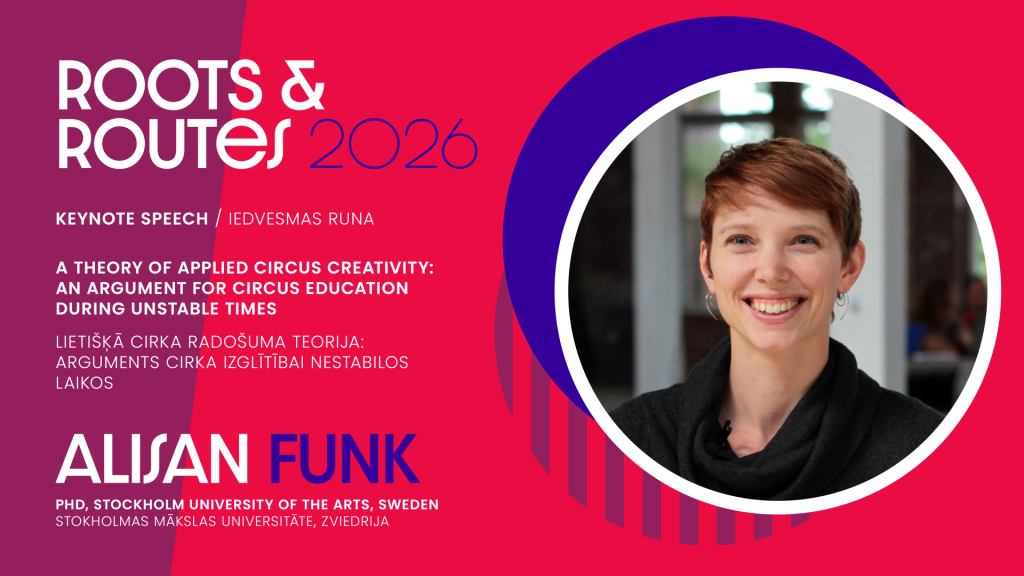
Does circus education prepare our students to be creative only within the circus? Can we justify pursuing arts education in an era of increasing threats to justice and dignity? Dr. Funk suggests methods we might use to answer these questions during this presentation of significant findings from her doctoral research investigating the development of creativity within the bachelor of circus arts programme in Sweden and the lasting effects on alumni during their careers.
Alisan Funk, Ph.D., has been a circus student, practitioner, creator, performer, teacher, teacher educator, and researcher. She is an assistant professor of circus and head of the Circus Department at the Stockholm University of the Arts, including appointments to working groups for innovation and curriculum. Passion for circus education – and educating about circus – drive her work and research at the intersections of circus, creativity, and curriculum theory. She has been a member of the managing board of International Network for Professional Circus Education (FEDEC) since 2020.
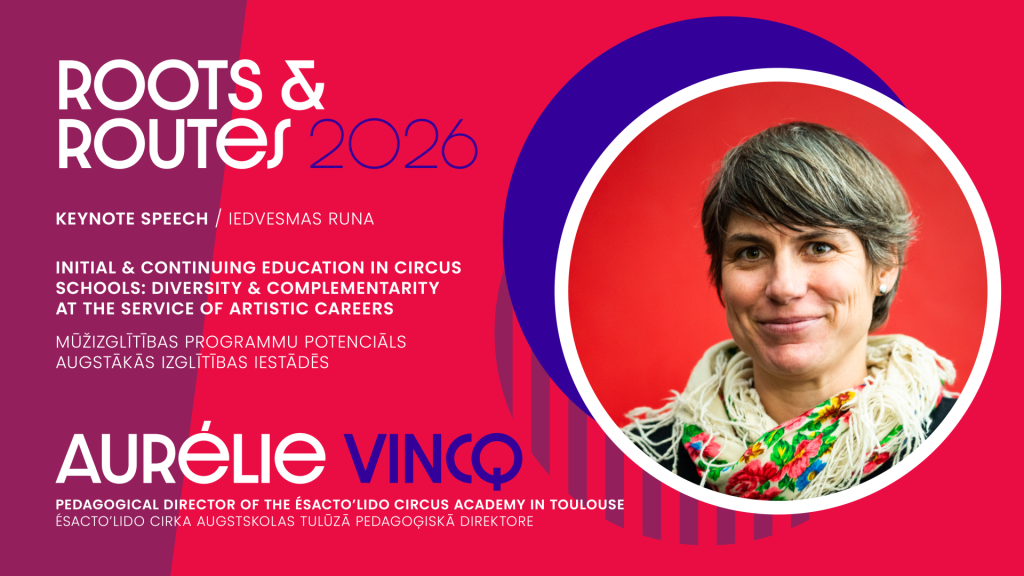
The professional path of a circus artist is often imagined as a linear journey beginning with initial training. In reality, many artists follow slower or more interrupted trajectories, shaped by late starts, pauses, and returns to practice. These profiles are often enriched by the breadth of their life and artistic experience. How can a vocational school recognise this diversity of paths, support non-academic trajectories, and itself grow through encounters with such varied experiences?
With a degree in French literature, political science and English, Aurélie Vincq has worked as coordinator and programmer for theatre and circus festivals, then production and support for street and circus companies. Since 2009 she has been involved in training at the Lido and then at the Esacto’Lido, in charge of international projects, integration, continuing education and pedagogy. Her plural profile and curiosity have allowed Aurélie Vincq to develop and coordinate artistic, cultural, and educational partnership projects.